
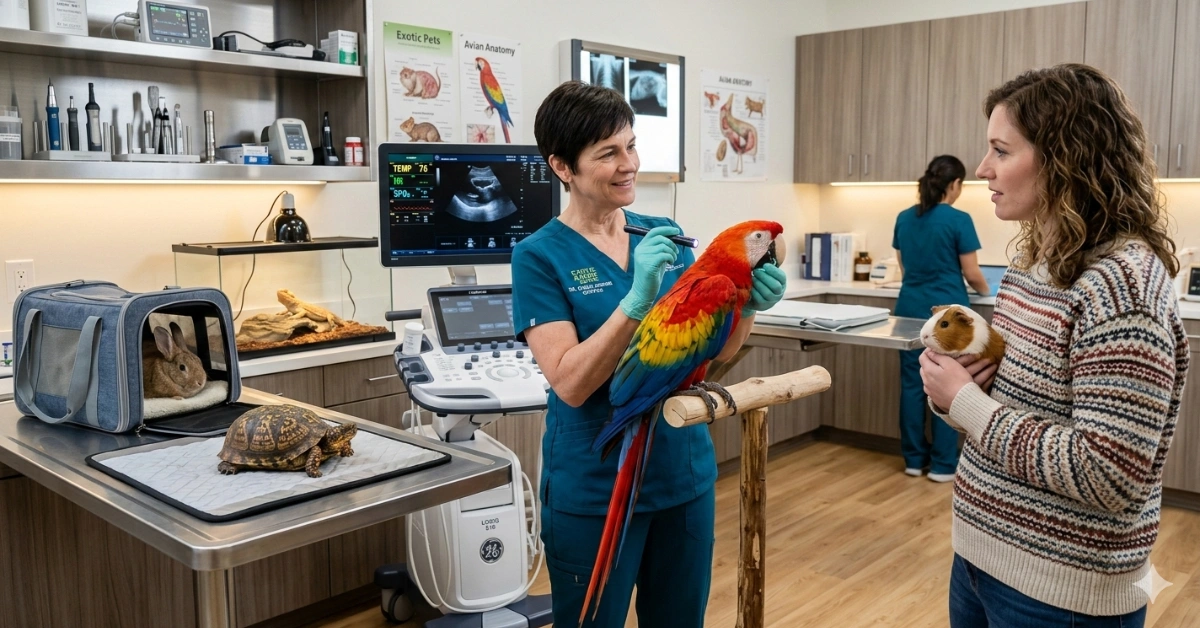
Owning an exotic pet—such as birds, reptiles, rabbits, ferrets, guinea pigs, or turtles—brings unique joys and challenges. Veterinary care for these animals often proves more expensive than for dogs or cats due to the need for specialized veterinarians, advanced diagnostics, and species-specific treatments. In 2025, routine visits range from $100–$250, while emergencies can climb into the thousands. This guide examines average costs, common procedures, and factors driving expenses.
Why Exotic Pet Vet Care Costs More
Exotic pets require veterinarians with extra training beyond standard veterinary school. Fewer exotic specialists exist, so owners often travel farther, adding costs. Diagnostics like blood work or imaging demand specialized equipment, and medications come in small doses or custom formulations.
Exotic animals hide illness well, so problems often escalate to emergencies by detection time. Inflation in veterinary services—driven by rising supply costs, staff wages, and technology—has pushed prices up 4–10% annually since 2021.
Limited pet insurance options for exotics mean owners pay most bills out-of-pocket.
Routine Care Costs
Annual wellness exams remain essential for early issue detection. Expect these 2025 averages:
- Exam fees — $100–$250 (wellness: $115–$135; medical/problem visit: $135–$200)
- Fecal parasite test — $50–$100
- Blood work — $150–$300
- Nail/wing/beak trim (birds) — $20–$50
Healthy pets typically need 1–2 visits per year, totaling $200–$500 annually for routine care.
Species-Specific Cost Breakdown
Costs vary by animal type and common health issues.
Birds (Parrots, Cockatiels, Budgies)
- Routine exam → $100–$200
- Annual costs → $200–$400
- Common issues → Respiratory infections ($500–$1,500); egg-binding ($1,000–$3,000); surgery (e.g., tumor removal) → $1,200–$3,000+
Reptiles (Bearded Dragons, Turtles, Snakes)
- Routine exam → $75–$150
- Annual costs → $100–$300
- Common issues → Metabolic bone disease (bearded dragons: $800–$2,000); respiratory infection → $500–$1,500; impaction/surgery → $1,000–$2,500
Rabbits
- Routine exam → $100–$200
- Spay/neuter → $300–$600
- Dental work (common due to overgrown teeth) → $500–$3,000
- GI stasis emergency → $1,000–$3,000
Ferrets
- Routine exam → $100–$200
- Annual costs → $300–$800
- Common issues → Adrenal disease treatment ($1,500–$4,000 lifetime); insulinoma/cancer → $2,000+
Other Small Mammals (Guinea Pigs, Hedgehogs)
- Routine exam → $100–$150
- Common issues → Respiratory infections or dental problems → $500–$2,000
| Pet Type | Routine Exam | Annual Routine Care | Common Emergency Cost |
|---|---|---|---|
| Bird (Parrot) | $100–$200 | $200–$400 | $1,000–$3,000+ |
| Bearded Dragon | $75–$150 | $100–$300 | $800–$2,000 |
| Rabbit | $100–$200 | $300–$600 | $1,000–$3,000 |
| Ferret | $100–$200 | $300–$800 | $1,500–$4,000 |
| Turtle | $100–$200 | $200–$400 | $500–$2,000 |
Emergency and Surgical Costs
Emergencies hit hard financially:
- After-hours/urgent exam — $185–$320+
- Hospitalization/day — $200–$500
- Surgery/anesthesia — $500–$2,000+
- Diagnostics (X-rays, ultrasound) — $300–$800
Examples:
- Bird egg-binding → $1,000–$3,000
- Reptile impaction surgery → $1,000–$2,500
- Rabbit GI stasis → $1,000–$3,000
- Ferret adrenal surgery → $2,000+
Ways to Manage Costs
- Build an emergency fund — Aim for $1,000–$5,000.
- Exotic pet insurance — Nationwide and MetLife offer plans (premiums $20–$50/month; coverage up to $10,000).
- Preventive care — Proper diet, habitat, and UVB lighting prevent many issues (e.g., metabolic bone disease in reptiles).
- Find a specialist early — Use directories like aemv.org or avma.org.
- Discuss payment options — Many clinics offer CareCredit or in-house plans.
The Bottom Line
Exotic pet care in 2025 costs more than traditional pets due to specialization and hidden illnesses. Budget $300–$800 annually for routine care, with thousands possible for emergencies. Responsible owners plan ahead—through savings, insurance, or preventive measures—to ensure their unique companions get needed care without financial ruin. Research your species thoroughly and locate a qualified exotic vet before bringing home your new friend.